Anxiety isn’t the problem most people think it is.
It’s not a personality trait, a life sentence, or proof that something is “wrong” with you.
It’s a signal.
And like any signal, it either gets understood and handled—or it gets ignored and amplified.
Most advice tells you to manage anxiety, soothe it, cope with it, or talk it down.
That approach keeps you stuck.
Not because you’re failing, but because you’re fighting the wrong way.
Anxiety doesn’t disappear through comfort. It loses power through a lack of clarity, discipline, and growth.
Here’s the truth most people won’t say out loud: anxiety survives when you treat it gently, explain it endlessly, or build your life around avoiding it.
It shrinks when you stop organizing your decisions around fear and start strengthening the system that produces it—your body, your mind, and your sense of self.
This isn’t about “positive thinking.” It’s not about bypassing real issues or pretending biology doesn’t matter.
Sometimes anxiety is mental. Sometimes it’s physical. Sometimes it’s the friction of outgrowing who you’ve been.
Winning the war in your head requires knowing which battle you’re actually in—and responding intelligently instead of emotionally.
This guide is direct because anxiety doesn’t respond to softness. You’ll learn how to identify when anxiety is a false alarm, when it’s a medical signal, and when it’s a call to lead yourself at a higher level.
Fix the body. Train the mind. Lead the self. Do that consistently, and anxiety stops running your life—not because it vanished, but because you did the work to rise above it.
FYI: This article is for informational purposes only. I have dealt with anxiety before and wanted to share what I have learned about this physical/emotional state. Please do your own research about this topic and speak with a trusted and qualified professional if needed.
When Anxiety Is a Symptom—Not the Root Problem
Anxiety is often mental. But sometimes, it’s biological, hormonal, neurological, or nutritional.
Ignoring that doesn’t make you tough. It makes you sloppy.
If anxiety shows up suddenly, intensely, or out of nowhere, you don’t just “mindset” your way through it—you investigate.
Medical Conditions That Can Masquerade as Anxiety
Anxiety symptoms can be caused or amplified by real, physical issues, including:
- Thyroid imbalances (hyperthyroidism is a big one)
- Blood sugar instability or insulin resistance
- Hormonal shifts (cortisol, estrogen, testosterone)
- Nutrient deficiencies (magnesium, B12, iron)
- Gut inflammation and microbiome imbalance
- Sleep apnea or chronic sleep deprivation
- Cardiac or respiratory conditions
- Side effects from medications or stimulants
Same symptoms. Different cause. Different solution.
Please check out this article from Healthline
Attacking Anxiety: From Panicked and Depressed to Alive and Free - Amazon
Signs Your Anxiety Might Be Medical, Not Mental
Sometimes anxiety isn’t coming from fear, trauma, or mindset at all—it’s coming from the body.
And this is where a lot of people get stuck, because they keep trying to “think” their way out of something that isn’t being created by their thoughts.
One of the clearest signs that anxiety may be medical rather than mental is a sudden onset.
If anxiety appears out of nowhere, without a clear trigger, life change, or pattern of overthinking, that’s a signal to pause and investigate. Mental anxiety usually has a story attached to it. Medical anxiety often doesn’t.
Another major indicator is physical symptoms that lead the experience, not follow it.
Heart palpitations, chest tightness, shortness of breath, dizziness, nausea, tingling, or a sense of faintness that occurs before any anxious thought can indicate a nervous system or physiological issue.
When the body fires first, and the mind scrambles to explain it afterward, anxiety becomes a symptom—not the cause.
Pay attention to anxiety that feels constant or chemically driven, rather than situational.
If your anxiety doesn’t fluctuate much with circumstances, reassurance, or mental reframes, and instead feels like a steady hum of tension or panic, it may be tied to hormones, blood sugar instability, inflammation, or nutrient deficiencies.
Mental anxiety rises and falls with perception. Medical anxiety often feels stubborn and non-negotiable.
Another red flag is anxiety paired with extreme fatigue, brain fog, or weakness.
When anxiety is accompanied by exhaustion that rest doesn’t fix, difficulty concentrating, or feeling physically depleted, it suggests the body is under stress at a systems level.
The mind doesn’t burn out in isolation—the body carries the load first.
You should also question a purely mental explanation if anxiety intensifies with stimulants, poor sleep, or certain foods, or improves noticeably when those are removed.
Caffeine sensitivity, crashes between meals, or anxiety spikes after sugar or alcohol can all point to nervous system dysregulation or metabolic issues rather than fear-based thinking.
Finally, if you’ve done the work—mindset shifts, exposure, journaling, breathwork, presence—and anxiety doesn’t meaningfully respond, that’s not a personal failure. It’s feedback.
Growth doesn’t mean forcing the wrong tool to work; it means choosing the right one. When anxiety refuses to budge despite consistent mental and emotional effort, it’s often asking you to look at the body.
Taking anxiety seriously enough to rule out medical causes isn’t avoidance or weakness—it’s responsibility. You can’t win a war if you’re fighting the wrong enemy. Fix what’s physical, train what’s mental, and then lead yourself from a place of clarity instead of confusion.
Please read this article from UnitedHealthcare here to learn more.
Why Ignoring the Body Keeps Anxiety Stuck
Ignoring the body keeps anxiety stuck because the body is often where anxiety starts, not where it ends.
When the nervous system is dysregulated, hormones are off, blood sugar is unstable, or inflammation is high, the body sends danger signals, whether there’s a real threat or not.
The mind then does what it’s designed to do—it tries to explain those signals. That’s how people end up stuck in anxiety loops they can’t think their way out of. They’re treating the story, not the source.
You cannot out-discipline a nervous system that’s chronically overstimulated. You can’t mind-set your way past sleep deprivation, hormonal imbalance, or nutritional deficiencies.
When the body is under constant physiological stress, anxiety becomes a biological alarm, not a psychological weakness. Ignoring that reality doesn’t make you resilient—it just keeps the alarm blaring.
This is also why anxiety feels so confusing for many people. They do “everything right”: positive thinking, exposure work, meditation, and affirmations.
Yet the anxiety stays. That’s not because the tools don’t work—it’s because they’re being applied on top of a shaky foundation.
A dysregulated body sabotages mental progress. The mind can only feel as safe as the body allows it to.
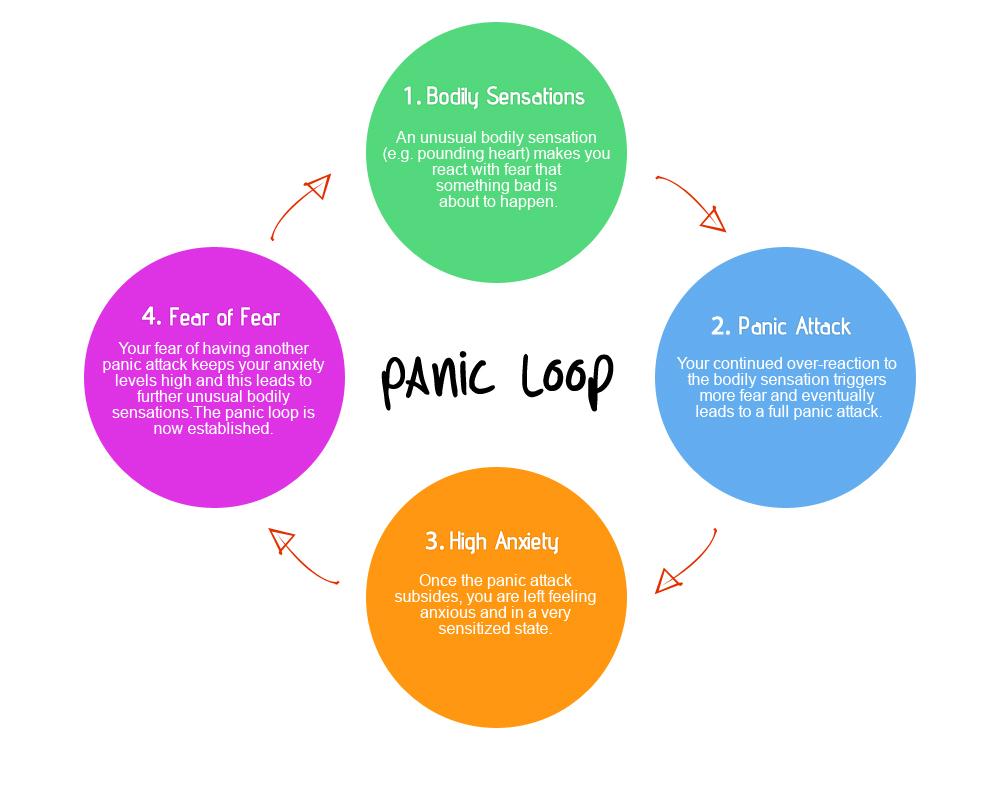
There’s also a feedback loop most people miss. Physical symptoms trigger anxious thoughts, those thoughts increase stress hormones, and those hormones intensify the physical symptoms.
When you ignore the body, you stay trapped in that loop. Addressing the body—sleep, nutrition, movement, breathing, medical issues—interrupts the cycle at its most powerful point.
From a growth perspective, ignoring the body is a form of spiritual bypassing. It’s the claim that awareness alone should override biology. Real integration means honoring the system you’re operating in.
Presence doesn’t replace physiology; it stabilizes it. Discipline doesn’t suppress signals; it responds intelligently to them.
If you want anxiety to stop running your life, you have to stop treating your body like a background character.
Regulate the nervous system. Restore the basics. Remove unnecessary stressors. When the body feels safe, the mind stops searching for danger—and anxiety finally loosens its grip.

Get Checked So You Can Fight the Right Battle
Getting checked isn’t about labeling yourself or looking for something to be “wrong.” It’s about clarity. And clarity is one of the fastest ways to reduce anxiety.
When you don’t know what’s causing the symptoms, the mind fills in the gaps with worst-case scenarios.
That uncertainty becomes fuel for anxiety. A basic medical evaluation removes guesswork so you stop fighting shadows and start addressing facts.
Many people avoid getting checked because they think it means admitting weakness or giving up control. It’s the opposite. Choosing to rule out medical causes is taking responsibility for your system.
If anxiety is being driven by hormones, sleep issues, nutrient deficiencies, inflammation, or medication side effects, no amount of mental toughness will override that for long.
You don’t win by trying harder—you win by correcting the inputs.
There’s also power in knowing what isn’t wrong. When tests come back normal, it eliminates a massive layer of fear.
The mind stops scanning for hidden danger, and you can commit fully to training the mental, emotional, and behavioral side without second-guessing yourself.
Certainty collapses anxiety faster than reassurance ever could.
Fighting the wrong battle wastes energy. Treating anxiety as purely psychological when it’s partially physical keeps you stuck, frustrated, and self-blaming.
Treating it as purely medical when it’s mental keeps you dependent and passive. Getting checked draws the line between the two, so each can be handled correctly.
Strong growth isn’t about forcing one narrative to fit everything. It’s about responding intelligently to reality.
Get the data. Fix what’s physical. Then put your full effort into building discipline, presence, and self-leadership. When you know exactly what you’re up against, anxiety loses its leverage—and you stop fighting yourself.
The Real Power Move: Fix the Body, Train the Mind, Lead the Self
The real power move isn’t choosing between biology, psychology, or spirituality—it’s integrating all three. Anxiety sticks around when people over-identify with one layer and ignore the others.
They try to heal the mind while the body is dysregulated, or pursue spiritual insight while the nervous system is fatigued. Real strength comes from alignment, not imbalance.
Fixing the body comes first because it sets the ceiling for everything else. Sleep, nutrition, movement, hormones, and nervous system regulation provide the baseline of safety on which your mind operates.
When the body feels under threat, the mind stays on guard. Addressing physical inputs isn’t weakness—it’s strategy. You stabilize the system so anxiety loses its biological leverage.
Training the mind is where discipline replaces reactivity. This isn’t about suppressing thoughts or chasing calm; it’s about building the capacity to notice fear without obeying it. You learn to separate signal from noise, reality from imagination, and action from avoidance.
A trained mind doesn’t argue with anxiety—it outgrows it through repeated, deliberate behavior.
Leading the self is the final shift, and it’s where lasting change happens. Leadership means you stop identifying with every sensation, thought, or emotional wave. You act from values instead of feelings.
You choose presence over panic, responsibility over blame, and growth over comfort. Anxiety may still show up—but it no longer decides.
When the body is regulated, the mind is trained, and the self is led with clarity, anxiety loses its role.
Not because you eliminated fear, but because you became someone who doesn’t revolve around it. That’s the real win—not peace as an escape, but strength as a baseline.
Being Present With Your Anxiety
One of the most counterintuitive—but powerful—ways to dissolve anxiety is to stop running from the feeling itself.
Anxiety persists not because it’s unbearable, but because it’s resisted. The moment you try to escape, suppress, or distract yourself from it, you create inner conflict. And that conflict is what keeps anxiety alive.
Presence changes the relationship entirely. Instead of labeling the sensation as a problem, you bring gentle, neutral attention to it. Not the story about it. Not the future it predicts.
Just the raw feeling in the body—the tightness in the chest, the flutter in the stomach, the heat, the restlessness. When attention rests fully in the sensation, without judgment, something unexpected happens: the fear loses its narrative fuel.
Anxiety needs time and thought to survive. It feeds on imagined futures and unresolved pasts. Presence removes both.
In the now moment, as Eckhart Tolle would say, the body may feel intense, but it is rarely intolerable.
What feels overwhelming is not the sensation itself—it’s the mind saying, “This shouldn’t be happening” or “I need this to stop.” When those thoughts are seen and allowed to pass, the feeling begins to soften on its own.
Being present does not mean forcing calm or pretending to be at peace. It means allowing what is, exactly as it is.
You’re not trying to get rid of anxiety—you’re giving it space to complete itself. Emotions that are fully felt do not linger; they move. Resistance freezes them. Awareness melts them.
There is also a deeper shift that happens in presence. You begin to realize that you are not the anxiety—you are the awareness in which anxiety appears.
The sensation comes and goes. The awareness remains. This recognition creates distance, not through suppression, but through clarity. Anxiety may still arise, but it no longer defines you or controls you.
When you stop running, anxiety loses its power. What was once an enemy becomes a teacher, pointing you back to the present moment. And in that moment—right now—you are already safe enough to feel what is here.
Anxiety-Free Lifestyle Tips
Attacking anxiety isn’t about eliminating stress (that’s impossible and, frankly, boring). It’s about building resilience and confidence to handle whatever comes your way.
Lack of sleep is like rocket fuel for anxiety. Aim for 7-9 hours of quality sleep each night. Establish a relaxing bedtime routine and stick to a consistent sleep schedule, even on weekends. (2)
What you put into your body matters. Cut back on caffeine and alcohol, which can exacerbate anxiety. Instead, focus on whole foods, plenty of water, and foods rich in omega-3 fatty acids, which have been shown to reduce stress.
You don’t have to face your problematic feelings alone. Surround yourself with people who uplift and support you. Don’t be afraid to open up about your struggles – vulnerability is strength, not weakness.
Attacking Anxiety In a Connected World
Social anxiety can make even the simplest interactions feel like climbing Mount Everest. But with the right tools, you can confidently navigate social situations.
Instead of worrying about how you’re coming across, focus on the other person. Ask questions and show genuine interest. This will take the spotlight off you and can help ease your anxiety.
You don’t need to be the life of the party or have the perfect thing to say. Accept yourself as you are, quirks and all. Authenticity is far more attractive than perfection.
Don’t throw yourself into huge social gatherings right away. Start with one-on-one interactions or small groups. Gradually work your way up to larger social events as your confidence grows.
Your Daily Mental Workout To Attack Anxiety
Just like you exercise your body to stay physically fit, you need to exercise your mind to keep anxiety at bay. Here are some exercises to add to your mental fitness routine: (3)
Progressive Muscle Relaxation For Attacking Anxiety
Starting from your toes and working up to your head, tense each muscle group for 5 seconds, then relax for 30 seconds. This helps release physical tension and calm your mind.
Visualization For Attacking Anxiety
Imagine a peaceful, safe place in vivid detail. What do you see, hear, smell, and feel? Practice visiting this place in your mind when anxiety strikes.
Thought Stopping For Attacking Anxiety
When you catch yourself in a negative thought spiral, mentally yell, “STOP!” Then, replace the negative thought with a more realistic or positive one.
Positive Habits for Anxiety
Building positive habits can create a foundation of calm in your life, making it harder for anxiety to take hold. Here are some habits For Attacking Anxiety:
- Daily Gratitude Practice For Attacking Anxiety
Each day, write down three things you’re grateful for. This shifts your focus from what could go wrong to what’s going right in your life.
- Regular Exercise For Attacking Anxiety
Physical activity is a powerful anxiety-buster. Aim for at least 30 minutes of moderate exercise most days of the week. Find activities you enjoy – it doesn’t have to be a grueling gym session.
- Limit Social Media For Attacking Anxiety
Constant connectivity can fuel anxiety. Set boundaries around your social media use. Try a digital detox for a day or week and see how it affects your anxiety levels.
Embracing the Process For Attacking Anxiety
Recovery from anxiety isn’t a straight line. It’s a journey with ups and downs, twists and turns. But every step forward, no matter how small, is progress.
Did you face a fear today? Manage to calm yourself during a panic attack? Celebrate these victories, no matter how small they might seem.
Healing takes time. Don’t expect to overcome years of anxiety overnight. Be patient and kind to yourself as you navigate this journey.
Setbacks are not failures – they’re opportunities to learn. When anxiety gets the better of you, ask yourself what you can learn from the experience.
How can you handle it differently next time?

Attacking Anxiety Conclusion
Attacking anxiety isn’t easy, but it’s absolutely possible. It’s about taking consistent, intentional steps towards a life of confidence and calm.
Remember, you’re not alone in this journey. Millions of people have walked this path before you and come out stronger on the other side.
Your anxiety doesn’t define you. It’s just a part of your story, not the whole book. You have the power to rewrite your narrative, to break free from the chains of apprehension and step into a life of freedom and possibility.
So, are you ready to break the anxiety trap and reclaim your life? The journey starts now, with the very next breath you take. You’ve got this.
Attacking Anxiety & Depression Program, Midwest Center Guidebook, Cognitive Behavioral Workbook for Stress, Depression and Anxiety Relief - Amazon
Related:
- Type A – Self-Control – Vulnerability To Stress
- Can Lucid Dreaming Help?
- Panic Away Program
- Attacking Anxiety and Depression: Midwest Center Video